 1300 557 356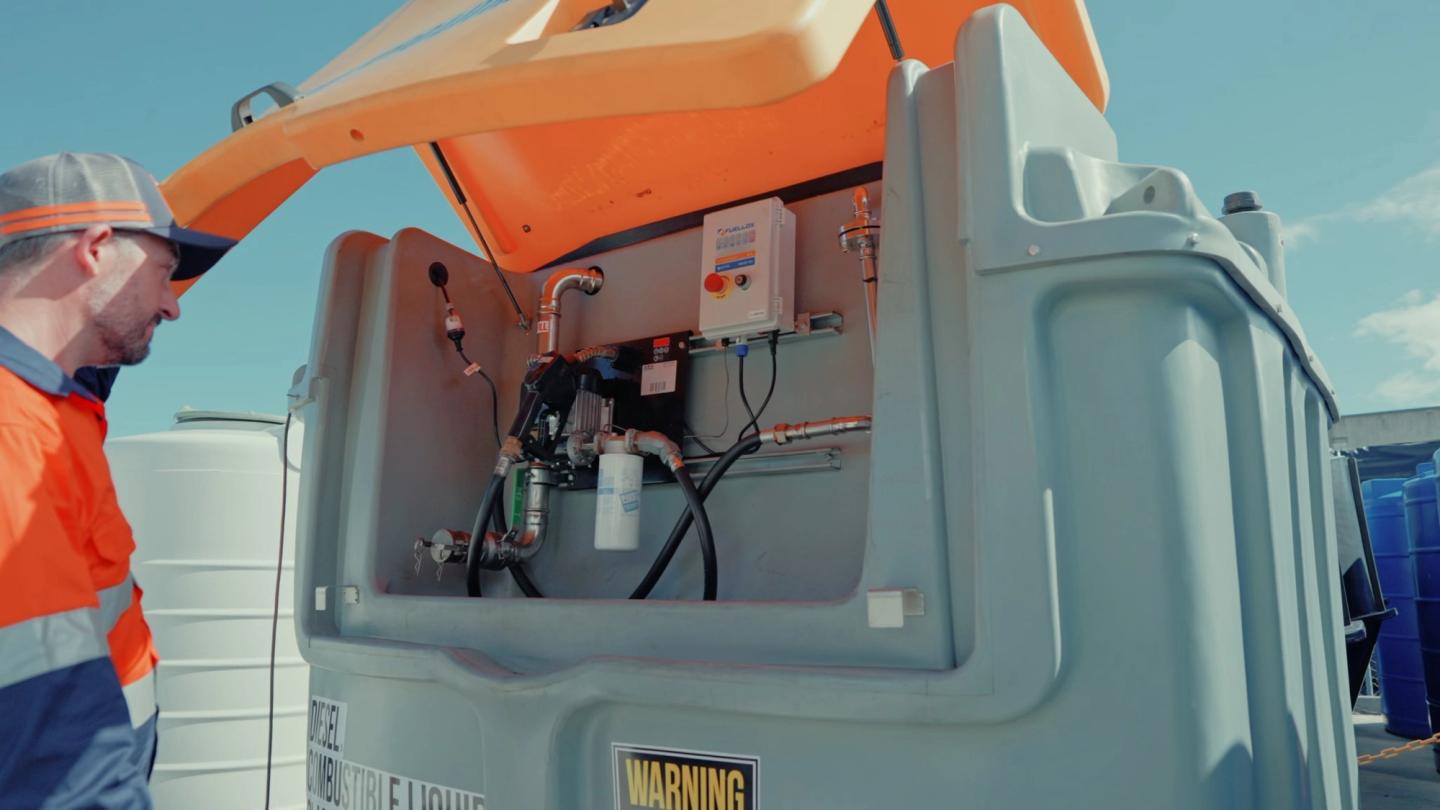
Early in 2026, diesel prices jumped hard. Conflict in the Middle East rattled supply, and by March diesel was edging toward $3 a litre in parts of the country. The government then halved fuel excise for three months, eased it back in July, and restored it in full in August.
If you run plant for a living, that was a rough ride. It also exposed something that was there all along: most civil businesses can't see where their diesel goes.
This guide covers what happened, what it did to diesel costs in civil construction, and what to do now that things have settled.
Why diesel costs in civil construction rise first
Civil is one of the most diesel-heavy industries in Australia. Excavators, graders, dump trucks, rollers and generators all run on it.
Here's a simple example. Ten machines each burning 30 litres an hour, eight hours a day, five days a week, use 12,000 litres a week. If diesel moves from $1.80 to $2.40 a litre, that's an extra $7,200 a week. Over a year-long job, it's hundreds of thousands of dollars that weren't in the tender.
Swap in your own machine count and prices. The point is how fast the number grows.
What the excise changes actually did
Here's the timeline, using the ATO's published rates for off-road diesel used in machinery and equipment:
- Up to 31 March 2026: excise of 52.6 cents a litre, and the same amount back as a credit
- 1 April to 30 June 2026: excise halved to 20.6 cents, so the credit dropped to 20.6 cents
- 1 July to 2 August 2026: excise at 36.6 cents, credit at 36.6 cents
- From 3 August 2026: excise back in full at 53.7 cents, credit at 53.7 cents
Here's the catch most people missed. For off-road use, fuel tax credit rates match the excise. When excise was cut, the pump price fell, but the credit fell by the same amount. For plant and equipment, the net saving was close to nothing.
Heavy trucks on public roads were different, because the road user charge was also cut. That's why on-road and off-road use need separate records.
The records problem this created
Over one year, civil businesses had to claim at three or four different rates. The rule is simple: you use the rate that applied on the day you bought the fuel.
That's easy if you know exactly which litres went into which machine, on which day, for which kind of use. It's very hard if your records are a paper logbook and a pile of supplier invoices.
Get it wrong and you either under-claim and leave money with the ATO, or over-claim and carry the risk if you're reviewed. Neither is a good look.
Unmonitored diesel costs more when prices rise
When diesel was $1.80 a litre, losing 200 litres a week to unlogged fills or leaks cost $360. At $2.40, the same loss costs $480 a week, or about $25,000 a year from a single tank.
Police in Western Australia warned in March 2026 that fuel theft was likely to rise, with unattended tanks named as a risk. On most sites, security is still a padlock and a shared key. At these prices, fuel theft prevention is cost control, not just security.
What to do now
This week
- Check your BAS claims. Make sure fuel bought in each period was claimed at the right rate. Your bookkeeper will thank you.
- Split on-road and off-road use. If trucks and plant share a tank, you need records that show which is which.
- Review contracts for fuel price escalation clauses before you price the next job.
- Lock down site tanks. A key fifteen people have copied is not access control.
This month
- Log every fill at the tank. The Fuellox fuel management system records who pumped, when, how much, into which machine and where. Every unlogged litre is now a real cost.
- Get usage by machine and job. The Fuellox dashboard shows fuel across every tank and site, which makes job costing and quoting far more accurate. Our guide to fuel job costing shows how to set it up.
- Protect remote tanks. Physical anti-syphon hardware from our fuel security range closes the gap on unattended plant and tanks.
The lesson from 2026
Prices will move again. They always do. What you control is whether your diesel spend is visible, authorised and charged to the right job.
Start by checking what your records are worth. Run your monthly litres through the fuel excise calculator. If the number is bigger than you expected, book a free demo and we'll show you how other civil contractors track it.
Frequently asked questions
What is the fuel tax credit rate for off-road diesel in 2026?
From 3 August 2026, the ATO rate for diesel used in off-road machinery and equipment is 53.7 cents a litre. Earlier in 2026 it was 20.6 cents (1 April to 30 June) and 36.6 cents (1 July to 2 August). Always use the rate for the date you bought the fuel.
Did the 2026 fuel excise cut help civil contractors?
Not much for plant and equipment. For off-road use, the credit equals the excise, so when excise fell, the credit fell by the same amount and the net saving was close to nothing. Heavy trucks on public roads did benefit, because the road user charge was also cut.
How can civil contractors reduce diesel costs?
Start by seeing where the diesel goes. Log every fill against a machine and job, lock down site tanks, and fit anti-syphon devices to plant left on remote sites. Then use the data to find machines using more than they should, and build real fuel figures into your quotes.